
By Dr Chidiebere Chukwu
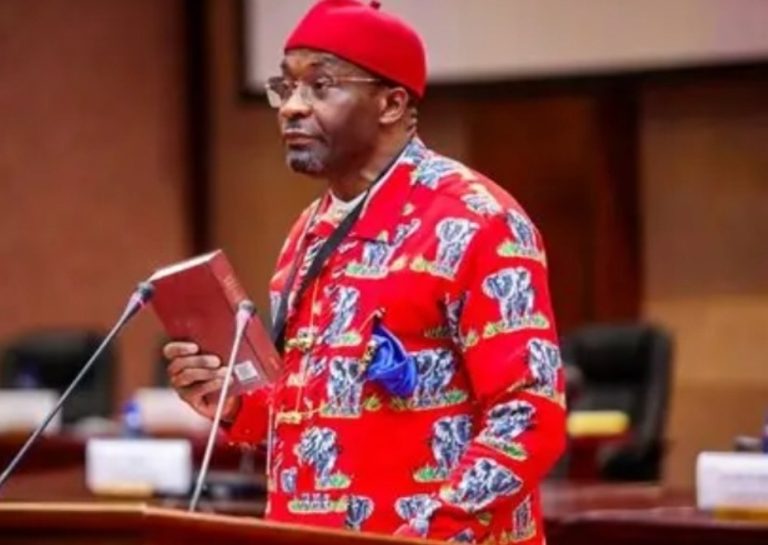
In politics, loyalty is the highest currency. It is the glue that binds generations of leaders and followers, mentors and protégés, visionaries and those they raise to continue their legacy. But when that loyalty is traded for selfish ambition, the result is always tragic. In Nigeria’s contemporary politics, few examples illustrate this truth more vividly than the story of Rt. Honourable Benjamin Kalu, the Deputy Speaker of the House of Representatives—whose long trail of alleged betrayals has become a moral warning to mentors everywhere, and a red flag to President Bola Ahmed Tinubu about the kind of men who occupy his inner circle.
The Seeds of Rise and the Fruits of Ingratitude
No man climbs alone. Behind every political ascent lies the silent sacrifices of benefactors—those who open doors, invest resources, and defend reputations. For Benjamin Kalu, that benefactor, many say, was His Excellency Senator Orji Uzor Kalu (OUK). It is widely recounted across Abia politics that OUK not only introduced him to the intricate world of leadership but also offered him visibility, guidance, and financial support at a time when few knew his name.
According to several political observers, OUK reportedly entrusted Kalu with opportunities that changed his destiny—exposing him to business ventures, political appointments, and contacts that later became the foundation of his career. Some even allege that Kalu was given a minority stake in one of OUK’s business entities, Bende Exports Limited, as a gesture of mentorship and trust.
Beyond financial patronage, it is said that the bond between the two men went deeper. Like a brother, OUK offered him accommodation and access in Lagos while grooming him to understand the rhythm of politics at the national level. To many, it looked like a father-and-son relationship built on trust and gratitude. But what followed, according to those close to both men, was a shocking reversal of loyalty—an avalanche of arrogance and public hostility from the very man who once leaned on OUK’s shoulders to stand.
From Protégé to Political Adversary
Those familiar with Abia politics narrate that after ascending to national prominence, Benjamin Kalu gradually distanced himself from his political mentor. The respectful humility that once defined him reportedly gave way to condescension and calculated rivalry. He began positioning himself as OUK’s equal, sometimes his superior, rewriting history and portraying himself as self-made.
Such conduct, many Abians lament, is not only a personal betrayal but a cultural affront. In Igbo political tradition, onye nyere gi aka, ekele ya—one must honour the hand that lifted him. But Kalu, they argue, has done the opposite. Instead of publicly acknowledging OUK’s role in his political journey, he has often taken positions and made statements that appear dismissive of the man whose network and goodwill paved his path to relevance.
A Trail of Broken Relationships
Benjamin Kalu’s story, as told by many within the All Progressives Congress (APC), is littered with strained alliances and broken trust. He reportedly quarreled with local party leaders in Bende who once worked tirelessly to secure his electoral victories. His disagreements with the Abia political establishment deepened when he allegedly chose to undermine Governor Alex Otti—a man currently fighting to rebuild Abia’s battered infrastructure and restore administrative sanity.
Instead of supporting the state’s rebirth, critics accuse Kalu of stirring unnecessary tension and division, using the names of President Tinubu and Chief Femi Gbajabiamila as shields for his combative posture. Each time he flaunts his proximity to the presidency, it leaves an impression that arrogance has overtaken statesmanship.
To those observing from afar, it looks like a recurring pattern: once a benefactor’s purpose has been served, he becomes expendable. That is the textbook mark of the serial betrayer—one who sees loyalty as a ladder, not a lifelong virtue.
Why This Should Worry President Tinubu
President Bola Ahmed Tinubu has built his political empire on a culture of mentoring. From Lagos to Abuja, his name is synonymous with leadership grooming and continuity. He has raised dozens of protégés who became governors, ministers, and lawmakers. His legacy depends not only on their performance but also on their loyalty to the ideals of service and gratitude.
That is why Benjamin Kalu’s case should concern him deeply. A man who allegedly betrayed his benefactors and alienated his state leadership cannot be trusted with the delicate task of representing the presidency in the Southeast. Loyalty is consistent; betrayal is habitual. And those who betray once rarely stop—they only adjust the timing.
President Tinubu’s political wisdom lies in his ability to sense duplicity before it blossoms. The whispers around Kalu’s character—of how he reportedly abandoned those who helped him rise—should not be ignored. History has shown that serial betrayers eventually turn against every hand that feeds them.
How Betrayal Damages Governance
Betrayal does more than hurt individuals; it undermines governance. When trusted aides or representatives act with arrogance and disregard for their mentors, it creates ripples of distrust across political structures. Good men, having suffered betrayal, retreat from mentoring others. Potential leaders lose faith in loyalty as a virtue. The culture of gratitude erodes, replaced by opportunism and deceit.
This is already visible in parts of Abia politics. The bad blood between Kalu and those who once nurtured him has fractured collaboration, leaving the people caught in the crossfire of ego and ambition. Instead of channeling his national position to attract federal attention to Abia’s development, he appears, in the eyes of many constituents, to be more interested in consolidating personal influence and punishing dissent.
Such behaviour, if left unchecked, breeds cynicism toward the central government. The ordinary Abian begins to believe that arrogance and impunity are rewarded at the national level. That perception damages the image of the presidency and endangers the trust-building efforts President Tinubu has extended to the Southeast.
A Cautionary Tale for Mentors Everywhere
The lesson from Benjamin Kalu’s reported conduct goes beyond politics; it touches the core of human relationships. To mentor is to risk betrayal. But the fear of betrayal should not stop good men from raising others. Rather, it should remind mentors to test the character of those they lift, to discern gratitude before granting power.
Nigeria’s political space needs more leaders like OUK and Alex Otti—builders who still believe in nurturing others. But if serial betrayal continues to be rewarded, the few remaining mentors will withdraw, leaving the field to opportunists and pretenders. That would be a tragedy for the next generation.
Conclusion: Beware the Smiling Traitor
The story of Rt. Hon. Benjamin Kalu, whether viewed through the lens of allegation or experience, is a moral parable for modern politics. It warns that loyalty without integrity is a ticking bomb. The same smile that flatters today can bite tomorrow.
For President Tinubu, this is the moment for discernment. The Southeast deserves genuine bridge-builders—leaders whose loyalty to national unity is not a mask for personal ambition. A man with a record of alleged betrayals should never be the face of reconciliation.
In the end, history remembers not how high a man rose but how faithfully he served those who helped him rise. To forget that is to court disgrace. And for those who mentor others, let Benjamin Kalu’s story—real or alleged—stand as a cautionary reminder: the serpent one feeds today may one day coil around the throne itself.
