
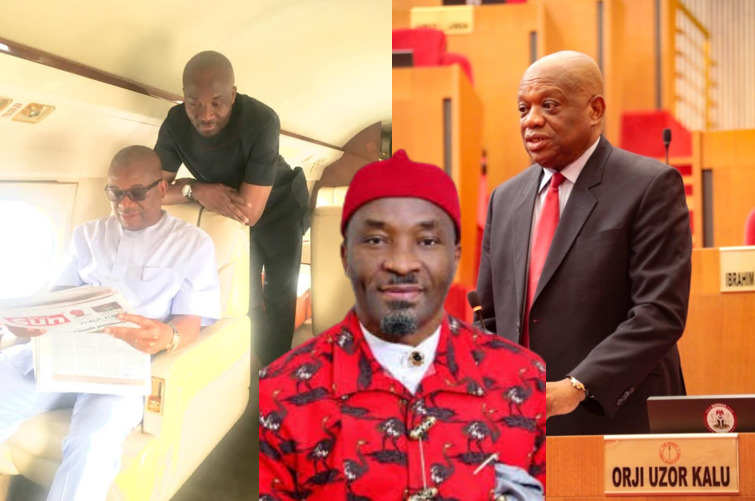
By Obinna Ejianya (9News Nigeria – Melbourne, Australia)
I am deeply baffled by what is currently playing out between Senator Orji Uzor Kalu (OUK) and the Deputy Speaker of the House of Representatives, Benjamin Okezie Kalu, because from every reasonable standpoint, this is a situation that should never have degenerated into a public show of rivalry.
There is a saying in our culture that when a child feels he has grown strong enough to carry his father on his shoulders, the father’s wrapper (ọgọdọ) will fall over his face, not to disgrace him, but to remind him that no matter how high he rises, his father remains older, wiser, and far more rooted in experience. In the same vein, it is often said that he who started cooking earlier will naturally have more worn-out utensils, because experience is not something that can be borrowed or claimed prematurely; it is earned over time and through seasons.
This is why what we are witnessing today is not just surprising but deeply troubling, because it reflects a recurring weakness within the Igbo political space, where those who have benefited from existing structures suddenly develop the urge to challenge those very foundations, thereby weakening the collective strength we so desperately need. We often lament that Igbos lack a central voice or a formidable leader who can stand firm when it matters most, yet when such figures emerge through years of political investment and resilience, we are quick to undermine them instead of consolidating around them.
We must begin to learn, as a people, that honour is not optional but essential, and it must be given to whom it is due. Igbos aspiring to be great should learn these virtues from others, as one Igbo proverb says, “The blacksmith that does not know how to forge a gong should look at the tail of a kite.” There are lessons to be drawn from other regions, particularly the Yoruba political structure, where leadership is not only recognised but preserved through loyalty and alignment. President Bola Ahmed Tinubu, whether I agree with his leadership style or not, has demonstrated that building people through patience and discipline ultimately produces a network of strong, dependable political actors who understand their place within a larger structure.
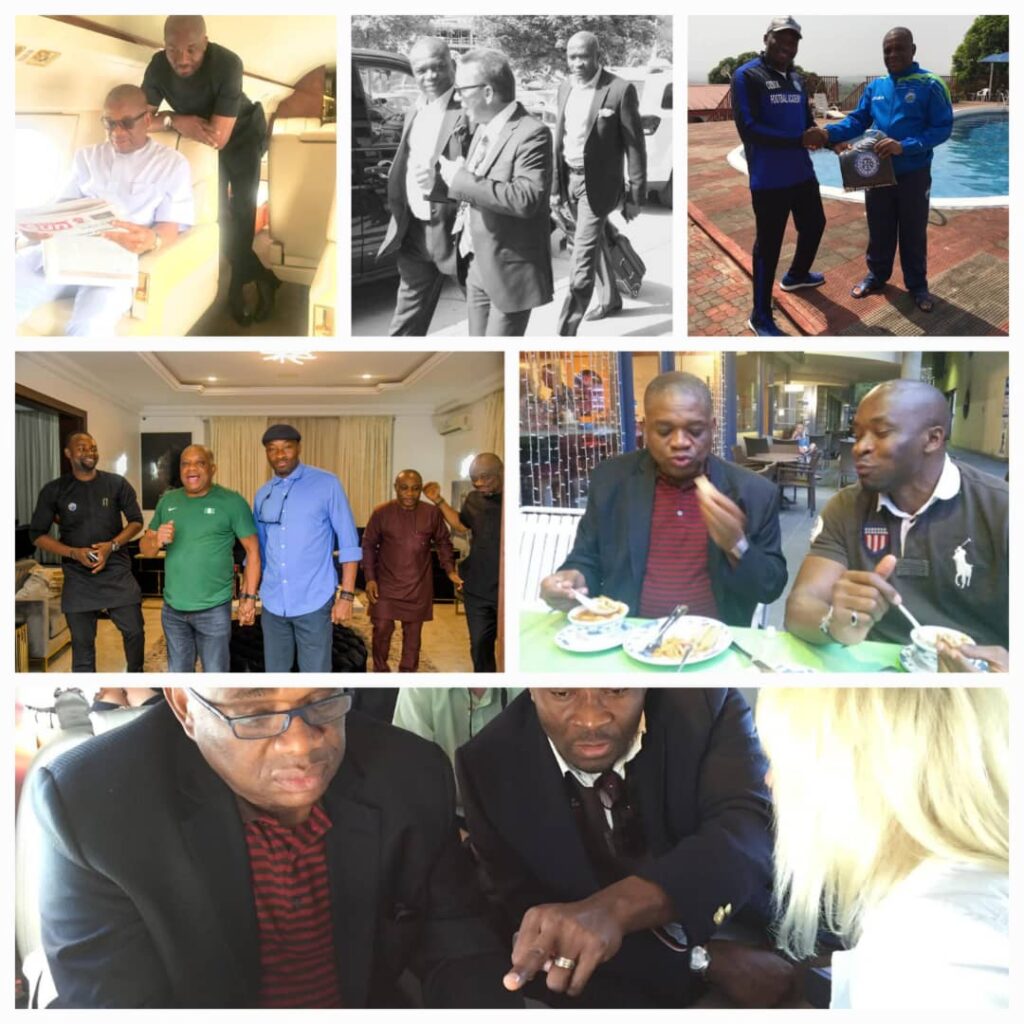
Against this backdrop, it becomes difficult to understand how Benjamin Okezie Kalu would find himself in a position where he appears to be asserting dominance in a space that, by all visible indications, was shaped significantly by the influence and long-standing political groundwork of Senator Orji Uzor Kalu. The reality, whether acknowledged publicly or not, is that the trajectory of Benjamin Kalu’s rise is not disconnected from OUK’s political ecosystem, as there are clear, traceable footprints—both documented and widely recognised—that point to the role played in bringing him to national prominence.
Even with his current position as Deputy Speaker, it is important to recognise that political maturity is not measured solely by office, but by depth, endurance, and the ability to navigate long-standing structures, and in that regard, Benjamin Kalu remains a junior in comparison to OUK, whose years in governance, party politics, and national influence have positioned him as a far more seasoned figure. It is therefore puzzling that recent narratives have emerged portraying Benjamin Kalu as positioning himself as the central driver of the All Progressives Congress (APC) in Abia State, with claims that he has been entrusted with delivering the state for President Bola Ahmed Tinubu ahead of the 2027 elections.
This becomes even more complex when placed side by side with the public statement made by Senator Orji Uzor Kalu, in which he clearly acknowledged that he had been given the responsibility to coordinate APC activities in Abia State, expressing appreciation to the President for the confidence reposed in him and outlining his commitment to working with stakeholders to ensure the emergence of widely acceptable candidates capable of securing victory for the party. When two influential figures within the same political structure begin to project parallel lines of authority, it inevitably creates confusion, tension, and the impression of an internal struggle that could have been avoided with proper alignment.
Further deepening this situation are speculations surrounding the 2027 governorship race in Abia State, where it is being suggested that Benjamin Kalu may be nursing governorship ambitions, while Senator Orji Uzor Kalu is believed to be positioning his younger brother, Maskot Kalu, for the same contest under the APC platform, particularly in a bid to challenge the incumbent administration of Governor Alex Otti. While political ambition is legitimate and expected in a democratic system, it must be guided by discipline, respect for hierarchy, and an understanding of timing, because when ambition begins to override structure, it often leads to unnecessary conflict and long-term fragmentation.
What is perhaps most concerning, however, is the attempt in some quarters to reinterpret or even deny the historical support systems that contributed to Benjamin Kalu’s rise, with claims suggesting that he did not benefit from Orji Uzor Kalu’s influence and, in some instances, reversing the narrative entirely by implying that he was the one who contributed to OUK’s political growth. Such assertions not only contradict widely known political realities but also risk eroding the culture of acknowledgment and continuity that is essential for building sustainable leadership structures.
At this point, it becomes necessary to emphasise that growth should not be mistaken for arrival, just as position should not be confused with supremacy, because leadership is ultimately a long-distance journey that demands patience, loyalty, and strategic awareness. The current situation, if not carefully managed, risks reinforcing a pattern that has repeatedly weakened the Igbo political bloc, where internal divisions overshadow collective progress, leaving the people without a unified front when it matters most.
In the end, this is not merely about a disagreement between two individuals, but about a larger question of whether we are willing, as a people, to build, respect, and sustain the structures that can give us lasting political relevance, or whether we will continue to dismantle them prematurely, only to later lament their absence when the need for strong leadership arises.
